After the Shadow:
What August’s Two Eclipses Leave Us With
The science is geometry. What we do with the moment is up to us.
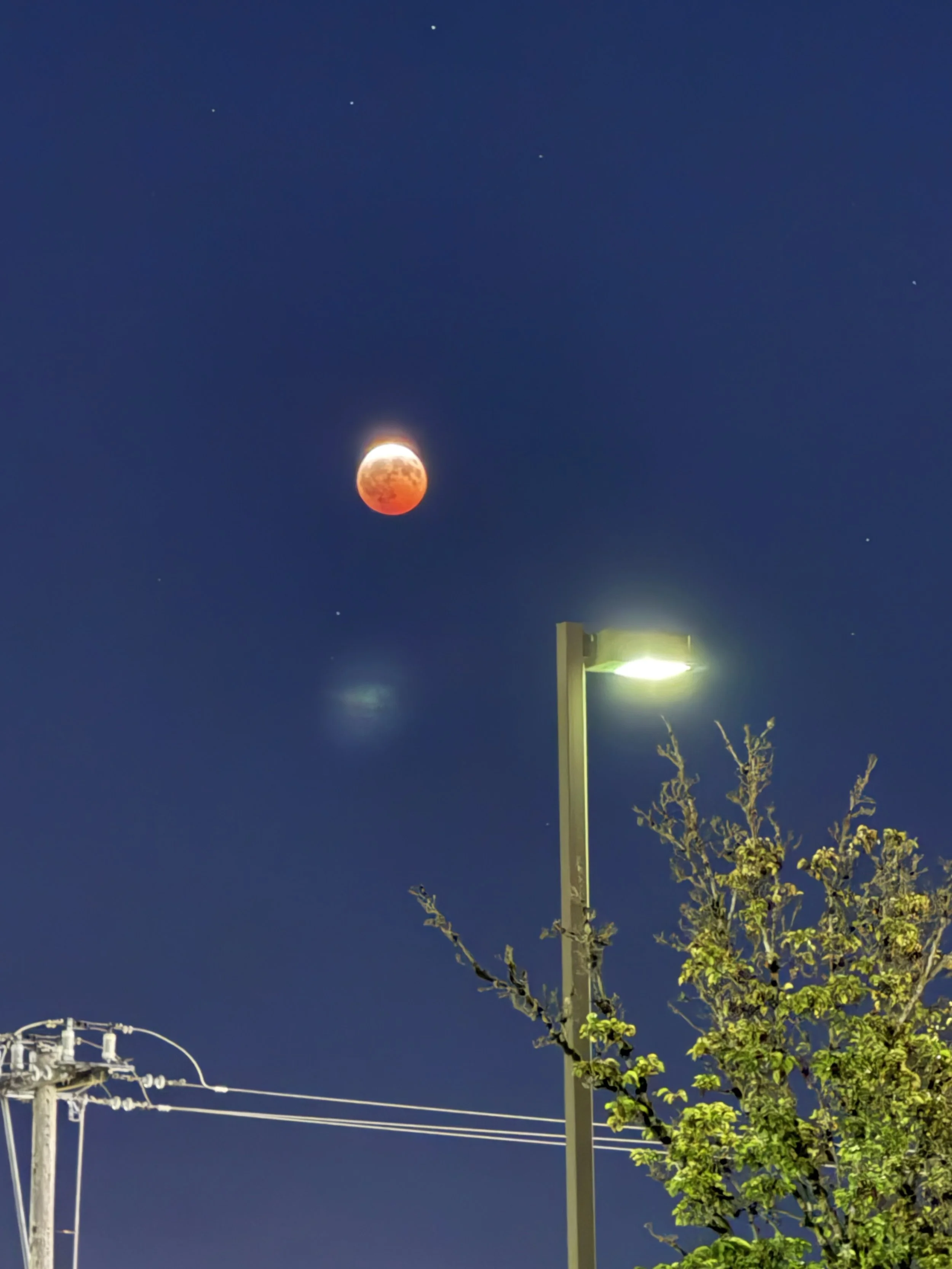
A few nights ago, somewhere in Oregon, we pulled into a random parking lot and looked up.
The Moon was disappearing.
There wasn’t a crowd or a ceremony. Just the night, a few parked cars, and the strange realization that the shadow moving across the Moon was coming from the planet we were standing on.
It was the second eclipse of August.
On August 12, the Moon passed between Earth and the Sun, producing a total solar eclipse. Just over two weeks later, on August 27–28, the arrangement reversed: Earth passed between the Sun and Moon, producing a deep partial lunar eclipse that covered more than 96 percent of the Moon at its maximum.
These weren't unrelated events. They were part of the same eclipse season.
Why Eclipses Arrive Together
Every month brings a New Moon and a Full Moon, but we don't experience eclipses every month because the Moon's orbit is tilted about five degrees relative to Earth's orbit around the Sun.
Most of the time, the three bodies don't perfectly align.
But roughly twice a year, their orbital paths line up closely enough to create what astronomers call an eclipse season.
During the August 12 solar eclipse, the Moon moved directly between Earth and the Sun. Its shadow crossed portions of the Northern Hemisphere, and within the narrow path of totality the Moon completely obscured the Sun, briefly revealing the solar corona usually hidden by its brightness.
Two weeks later came the lunar eclipse.
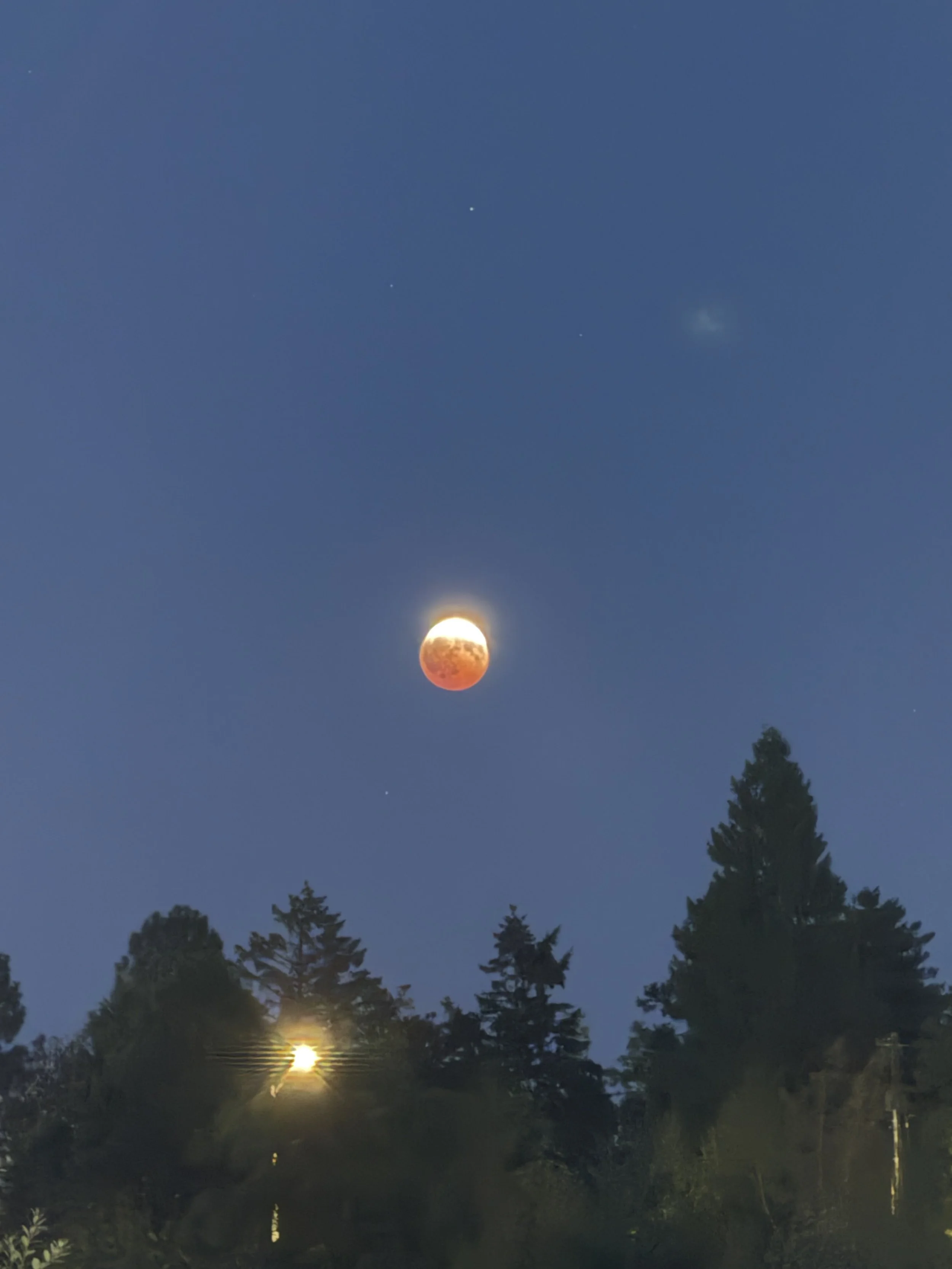
This time Earth moved between the Sun and Moon, causing the Moon to travel through Earth's shadow. At maximum, nearly the entire lunar surface was immersed in the darkest part of that shadow.
And the Moon didn't simply disappear.
It reddened.
Even when Earth blocks direct sunlight from reaching the Moon, some light travels through our atmosphere first. Earth's atmosphere scatters more blue light while allowing more red and orange wavelengths through, bending that light into Earth's shadow.
In a way, the color of an eclipsed Moon contains the combined glow of sunrises and sunsets happening around Earth.
Which is one of those instances where the scientific explanation somehow makes the phenomenon even more beautiful.
For a few weeks, we witnessed the machinery of our solar system become unusually visible.
Then everything returned to normal.
Or at least, what we call normal.
What Happens After the Shadow?
Humans have been assigning meaning to eclipses for thousands of years.We don't need to believe that eclipses dictate our futures to understand why.An eclipse interrupts something we usually experience as permanent.The Sun is always there.The Moon is always there.Then suddenly, one disappears.And eventually, it returns.There is something deeply familiar about that pattern.Human lives contain their own eclipses.Periods when we can't see where we're going. Moments when something that once felt certain becomes obscured. Relationships change. Identities shift. Plans collapse. Grief changes the landscape. Sometimes our energy disappears. Sometimes an old version of ourselves quietly stops making sense.Nature contains these interruptions too.Forests burn and regenerate. Rivers flood and retreat. Leaves fall from trees that will eventually grow them again. Animals migrate. Landscapes move between abundance and dormancy.Darkness does not always mean something has gone wrong.Sometimes something is simply passing through shadow.So What Do We Do With
Eclipse Season?
Maybe the most useful thing about witnessing something this large is remembering to examine the smaller world of our own lives.
Not because the sky demands that we change.
Because interruption creates perspective.
The weeks following an eclipse season might be a good time to ask:
What has become clearer lately?
What am I holding onto simply because it's familiar?
What part of my life needs more attention?
What might I need to release before something new has room to emerge?
And then, more importantly, translate those questions into ordinary life.
Call someone you've been meaning to call.
Spend an afternoon outside without turning it into content or productivity.
Apologize when you need to.
Rest before your body forces you to.
Pay attention to the people who make you feel more like yourself.
Make the thing you've been afraid to make.
Protect the places you love.
Notice your own seasons instead of demanding that you operate at maximum capacity year-round.
Maybe the intention after an eclipse doesn't need to be dramatic.
It can simply be:
Pay closer attention.
To the body.
To the people around us.
To the natural world.
To what is ending.
To what keeps trying to begin.
And perhaps until the next eclipse season, we can practice becoming a little more comfortable with periods when we don't have perfect visibility.
The Sun disappeared.
The Moon disappeared.
Both came back.
Maybe the significance isn't that the universe sent us a message.
Maybe the significance is that, for a moment, we looked up long enough to remember where we actually are.